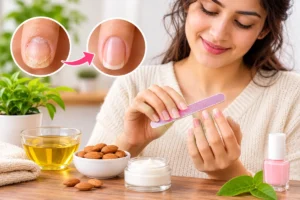
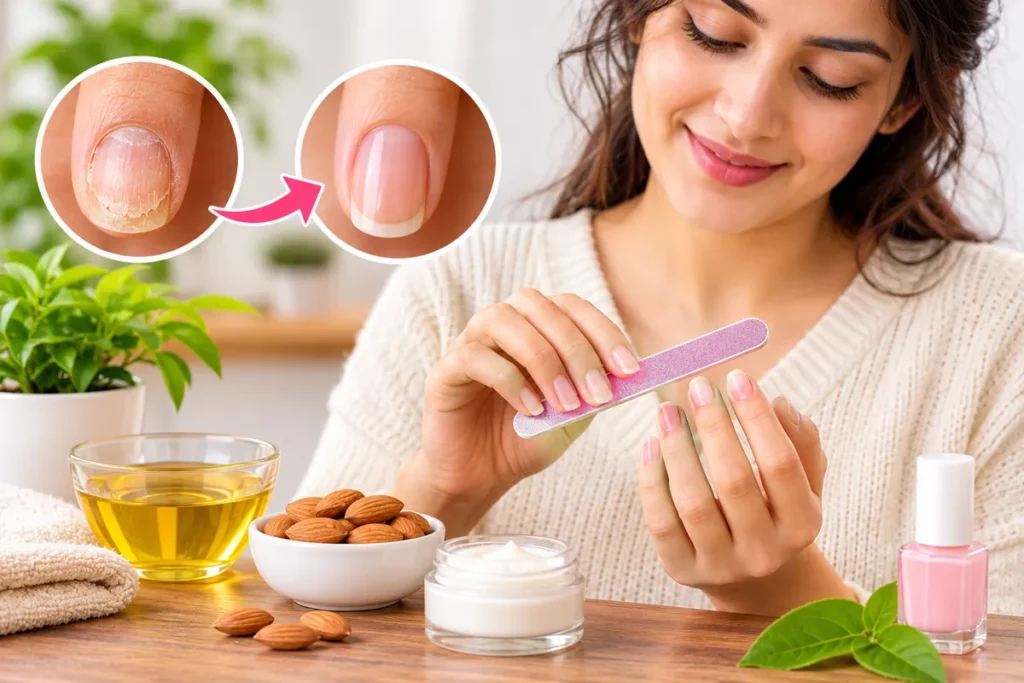
You finally get your nails to a length you like, and then one snags on a sweater and splits. Or they peel at the tips, bend, or just never seem to get past your fingertips. It’s frustrating, especially after trying oils, gummies, and quick-fix products that didn’t change much.
If you’ve been searching for how to make nails grow faster, the honest answer starts with keeping the length you already have. This guide walks you through why nails break, the simple daily habits and home treatments that can help, and which popular tips to skip. You’ll also learn what results to realistically expect and when it’s worth seeing a doctor.
How Fast Do Nails Actually Grow, and Can You Speed It Up?
Fingernails grow at a slow, steady pace. On average, they add about 3 millimeters a month, which is a little over a tenth of an inch. Toenails are even slower, usually growing at about half that speed or less.
Your growth rate isn’t fixed. A few everyday things can push it up or down:
- Age: When you’re younger your nails grow faster, then slow down as you age.
- Season: Many people see faster growth during warmer months.
- Dominant hand: Nails on the hand you use most often usually grow a bit faster.
- Circulation: Nails get their nutrients from blood flow, so staying active may play a small supporting role.
No cream, food, or trick will double how fast your nails grow. The good news is that most people don’t actually have slow nails. They have nails that break. Once you stop losing length to snaps and peels, your nails will seem to grow faster, because you finally get to keep every millimeter they make.
Why Your Nails Break, Peel, or Split Before They Get Long
Your nails are made of many thin, stacked layers of a tough protein called keratin. When those layers dry out or get stressed, they start to pull apart. That’s why a nail can peel at the tip or snap just as it finally reaches a nice length.
A few everyday habits cause most of this damage:
- The wet-dry cycle: Nails soak up water and swell, then shrink as they dry. Doing this many times a day, through dishwashing, cleaning, or frequent hand washing, slowly loosens the layers.
- Harsh soaps and sanitizers: These strip away the natural oils that keep nails pliable.
- Acetone removers: Acetone is fast but can leave nails very dry and chalky.
- Nails as tools: The free edge is exposed to sudden pressure while opening cans, scraping labels or peeling tape.
- Rough gel or acrylic removal: Prying or scraping off old product often tears away the top layers of your natural nail.
- Dry air: Low humidity, especially in winter or air-conditioned rooms, makes nails more brittle.
Most of these damage the nail slowly, so you don’t notice them until a break happens. That’s often why nails feel like they “never grow.” They do grow, but the length keeps getting lost along the way.
Daily Habits That Protect Your Nails and Help Them Keep Their Length
Small changes in how you use your hands each day can make a big difference. These habits target the everyday damage that causes most breaks:
- Wear gloves for wet work. Put on rubber gloves for dishes, cleaning, and scrubbing. Cotton-lined pairs feel more comfortable and keep sweat off your skin, so you’re more likely to actually use them.
- Moisturize after every hand wash. Rub a little hand cream into your nails and the skin around them, not just your palms. This puts back some of the oil that soap and water wash away.
- Switch to acetone-free remover. It takes a bit more effort to wipe off polish, but it’s gentler on your nails. Changing your polish less often helps too.
- Leave snags alone. Picking or biting a rough edge usually pulls off more nail than you meant to. Smooth it with a file as soon as you notice it, before it catches and tears.
- Use your fingertips, not your nails. Open cans with a spoon, peel labels with a butter knife, and press buttons with the pad of your finger.
While your nails are getting stronger, keep them short, just a little past your fingertip. Shorter nails are less likely to bend or catch, so they break less. Once they stay smooth and stop peeling, you can let them grow out a little at a time.
What to Eat for Stronger Nails, and Whether Supplements Like Biotin Help
Nutrients That Support Healthy Nails
Your nails are built from protein, so what you eat plays a part in how well they grow. A balanced diet usually covers everything they need, without special products. A few nutrients matter most:
- Protein: eggs, beans, lentils, fish, chicken, yogurt, and paneer or tofu
- Iron: leafy greens, lentils, chickpeas, red meat, and fortified cereals
- Zinc: nuts, seeds, whole grains, dairy, and shellfish
- B vitamins: eggs, milk, whole grains, and bananas
Eating a variety of these foods most days may help support steady, healthy growth. More isn’t better, though. Large doses of single nutrients won’t build super-strong nails, and some can cause problems when taken in excess.
What the Evidence Says About Biotin and Collagen
Biotin is a B vitamin often sold for hair and nails. A few small studies suggest it may help some people with brittle nails, but there’s little proof it does much if your nails are already healthy or your diet is balanced. Research on collagen supplements is also limited and early.
Biotin has a hidden catch. High doses can interfere with some blood test results, including thyroid and heart tests, which could lead to a wrong reading. If you’re thinking about trying any supplement, check with a doctor or pharmacist first. Tell them you take it before any lab work.
Home Treatments That Strengthen Nails (and How to Use Them)
A simple nightly routine may help keep nails flexible, so they bend instead of snapping.
- Apply nail or cuticle oil before bed. Jojoba oil and vitamin E oil both work well. Plain petroleum jelly is a cheap option that also does the job. Massage a drop into each nail and the skin around it for a few seconds.
- Follow with a thicker hand cream. Look for humectants, which are ingredients that pull moisture into the skin, such as glycerin or urea. Layering cream over oil helps lock that moisture in.
- Wear a base coat under polish. It adds a thin protective layer, helps prevent staining, and takes some of the daily wear for your nail.
Hardeners can help weak, bendy nails, but use them with care. Some formulas make nails stiff, and stiff nails tend to crack rather than flex. Follow the label, use them for a short stretch, and take breaks. If your nails start to feel dry or chip more, stop.
None of these treatments fix nails overnight. Oils and creams work slowly, and you may notice smoother, less peely edges after a few weeks of regular use.
How to Trim, File, and Care for Cuticles Without Weakening Your Nails
How you shape your nails matters as much as how often you do it. A few small changes in technique can mean fewer splits and snags.
- Trim after a shower or bath. Warm water softens nails, so clippers cut cleanly instead of cracking the edge.
- File in one direction. Sawing back and forth roughs up the tip and can start tiny tears. Use a fine-grit file or a glass file, and move from the side toward the center.
- Pick a strong shape. Rounded nails, or “squoval” ones (square with soft corners), hold up better than sharp points or very square edges. Points and hard corners tend to catch and break.
- Push cuticles back, don’t cut them. Your cuticle seals the base of the nail and helps keep germs out. After a shower, gently push it back with a soft towel or a wooden stick.
Recovering After Gels or Acrylics
Never peel or pry off old product. Soak it as the directions say and let it loosen on its own, or have a salon remove it. Afterward, keep nails short and smooth while the thinned layers grow out. That can take a few months, so be patient with them.
Popular Nail Growth Hacks That Don’t Work or Can Backfire
Plenty of nail tips get passed around online, but many have little to back them up. Some can even leave your nails worse off.
- Garlic or lemon soaks: There’s no good proof that either one speeds growth. Garlic can irritate the skin around your nails, and lemon juice is acidic and may dry them out.
- Long water soaks: Soaking feels like it adds moisture, but it puts nails through the same swell-and-shrink cycle that weakens them.
- Hardener every day: If a little helps, more seems better. With hardeners, though, constant use often makes nails more brittle, not stronger.
- Nails need to “breathe”: Nails get oxygen from your blood, not the air. Breaks after gel polish come from the product and how it’s removed, not from a lack of air.
- White spots mean low calcium: Those spots are usually caused by small bumps or knocks to the nail. They grow out on their own.
- Fast-growth serums: No product can make nails grow inches in weeks. If a label promises that, be skeptical.
How Long Before You See Stronger, Longer Nails?
You may notice some changes fairly soon. After a few weeks of steady care, many people see less peeling and fewer snags at the tips.
Real strength takes longer, because new nail forms at the base and slowly moves up. The part you see today was made months ago. A fingernail usually takes about 4 to 6 months to grow out completely, so the healthier nail you’re building now will reach the tip gradually. Toenails are slower still and can take a year or more.
That’s why sticking with your routine matters more than any single product. Gloves, oil, and gentle filing only work if you keep doing them. Skip them for a week, and one bad break can undo months of growth.
When Weak or Slow-Growing Nails May Need a Doctor’s Attention
Most nail trouble comes from everyday wear and gets better with gentle care. Sometimes, though, your nails can show signs that something else is going on. It’s worth seeing a doctor or dermatologist (a skin and nail doctor) if you notice:
- Brittleness that doesn’t improve after a few months of good care
- Spoon-shaped nails that scoop upward, or clubbed nails, where the fingertips widen and the nails curve down around them
- Small pits, deep side-to-side grooves, or nails lifting away from the skin underneath
- Thick, yellow, or crumbly nails, which can point to a fungal infection
- A new dark line or streak, especially on just one nail
- Pain, swelling, redness, or pus around a nail
- Sudden nail changes along with other symptoms, such as feeling unusually tired or losing more hair than normal
None of these signs means something is seriously wrong. Still, a doctor can look at your nails, ask a few questions, and suggest tests if needed. If there’s an underlying cause, home care alone may not fix it, so getting it checked can save you months of guessing.
How to Save a Nail That’s Already Cracked or Split
A crack doesn’t always mean you have to cut the nail short and start over. If the split is near the tip and doesn’t hurt, a simple patch can often hold it together while it grows out.
Patching isn’t the right choice for every break. If the crack reaches the skin, bleeds, or feels sore, don’t glue over it. Trim the loose part carefully, keep the area clean, and let it heal. Watch for redness, swelling, or pus, and see a doctor if any of these appear.
For a crack that’s safe to patch:
- Clean and dry the nail. Remove any polish so the patch sticks well.
- Cut a small piece of patch material. Use a silk wrap, or the thin paper from an empty tea bag. Make it just big enough to cover the crack.
- Brush on a thin layer of nail glue over the crack, and press the piece on top.
- Add one more thin coat of glue, let it dry fully, and then buff the surface lightly until it’s smooth.
- Seal it with a base coat or polish for extra protection.
Until the crack grows past your fingertip, keep that nail a little shorter so it’s less likely to catch. When it’s time to remove the patch, soak it off instead of peeling it. Nail glue usually needs an acetone remover, so apply oil or cream to the nail afterward.
Related Article:
Nail Art Design for Bridal
Valentine’s Nails
Acrylic Nail Ideas